
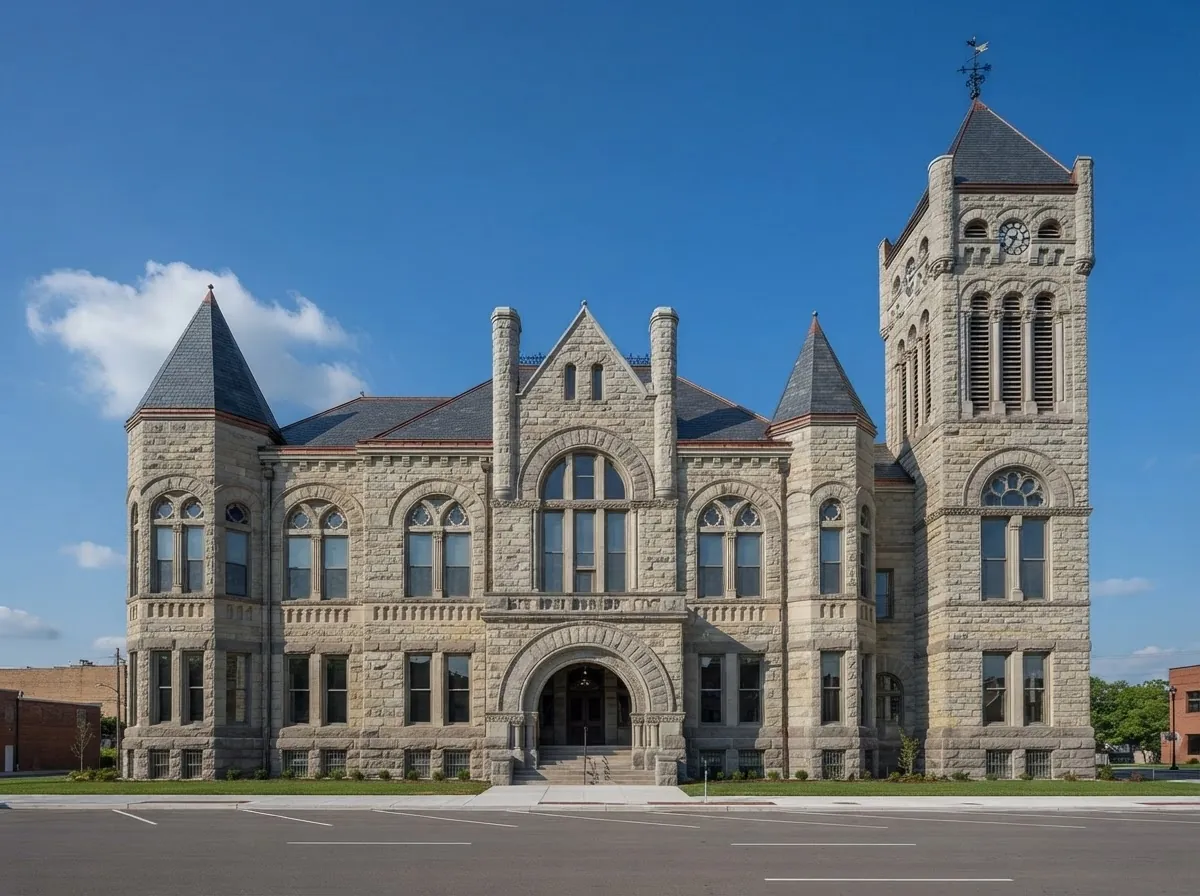
Court records in Morrison County, Minnesota, are maintained by the district court clerk's office and are accessible through online tools, official court portals, and directly at the clerk's office. MorrisonCourt.us will help you find public information about court records in this county. Additional access points include the Minnesota Court Records Online (MCRO) system, the Morrison County District Court page on the Minnesota Judicial Branch website, and a personal visit to the courthouse in Little Falls.
Morrison Court System Overview
Morrison County is part of the Seventh Judicial District of Minnesota. This district encompasses several counties in the central part of the state, including Becker, Benton, Clay, Douglas, Mille Lacs, Morrison, Otter Tail, Stearns, Todd, and Wadena. The Morrison County District Court has general jurisdiction of the first instance — civil, family, probate, juvenile, and criminal cases are heard here.
The courthouse is located in Little Falls:
The clerk's office hours are generally Monday through Friday, from 8:00 AM to 4:30 PM, excluding public holidays. It is advisable to confirm the hours by phone or on the official court page before visiting.
Courts Serving Morrison
Residents of Morrison County are served by several judicial institutions at different levels.
State District Court
U.S. District Court
Morrison County falls under the jurisdiction of the U.S. District Court for the District of Minnesota. The nearest divisions are located in Minneapolis and Fergus Falls.
U.S. Bankruptcy Court
Bankruptcy cases are handled by the U.S. Bankruptcy Court for the District of Minnesota, with the main office in Minneapolis.
There are no separate municipal courts within Morrison County — all local-level cases are directed to the state district court.
What Types of Cases Morrison Courts Hear
The Morrison County District Court hears a wide range of cases. Here are the main categories:
- Criminal cases: felonies, misdemeanors, gross misdemeanors
- Traffic violations and DUI/DWI
- Civil lawsuits, including small claims
- Family law: divorce, custody, child support, protective orders
- Probate matters: estate administration, guardianship, conservatorship
- Juvenile cases: juvenile offenses, child protection, adoption
More details on each category are in the following sections.
District Court Cases in Morrison
The Morrison County District Court is a court of general jurisdiction of the first instance. It handles all felonies — from charges to sentencing. Unlike some other states, Minnesota does not have a separate magistrate court; the same district court handles both serious crimes and civil cases without a claim amount limit.
A criminal case begins with the filing of an indictment by the county prosecutor. A judge is assigned according to the internal case distribution. Civil cases exceeding the small claims limit are also initiated here — the plaintiff files a complaint, after which the court schedules proceedings. Appeals from district court decisions are filed with the Minnesota Court of Appeals.
Magistrate Court Cases in Morrison
In Minnesota, a separate magistrate system does not function as an independent court. Instead, district judges and referees hear cases that in other states would go to a magistrate court: misdemeanors, traffic violations, preliminary hearings in felony cases, and small claims.
Small claims (conciliation court) in Minnesota are limited to $15,000. These cases are handled in a simplified procedure without mandatory attorney participation. DUI/DWI cases start with an arraignment in the Morrison County District Court. Traffic fines can be paid online or through the court clerk's office.
Family Law, Probate, and Juvenile Matters in Morrison
Family Law
Divorces, custody determinations, child support enforcement, paternity establishment, and protective orders are all handled by the Morrison County District Court. Certified copies of divorce decrees can be obtained from the court clerk's office where the decision was made.
Probate Matters
The court handles estate administration (probate), appoints guardians for incapacitated persons and minors, and deals with trust-related cases. Applications are submitted to the Morrison County District Court clerk's office.
Juvenile Matters
Juvenile cases — offenses, child protection (CHIPS), termination of parental rights — are heard by the same district court, but records are confidential. Access is restricted by Minnesota law. For information on juvenile cases, contact the court clerk's office directly.
How Cases Move Through the Morrison Court System
The general case progression scheme is as follows:
- Case initiation. Criminal — indictment from the prosecutor; civil — filing a complaint; family or probate — filing a petition.
- Judge assignment. The clerk's office distributes the case among county judges according to internal rules.
- First hearing. In criminal cases — arraignment (charge announcement, bail setting). In civil cases — planning conference.
- Pre-trial phase. Motions by parties, evidence exchange (discovery), plea negotiations in criminal cases, or settlement attempts in civil cases.
- Trial or resolution. The case concludes with a verdict, jury decision, settlement, or default judgment.
- Post-judgment. Criminal cases — sentencing; civil cases — enforcement of judgment. Appeals are filed with the Minnesota Court of Appeals.
Court Administration, Local Rules, and Public Access in Morrison
The administrative management of the Seventh Judicial District courts is carried out by the district's chief judge in conjunction with the trial court administrator. The Morrison County court clerk's office coordinates hearing schedules, processes documents, and provides public access to records.
Local rules of the Seventh Judicial District are published on the Minnesota Judicial Branch website. These rules regulate document submission procedures, deadlines, and procedural requirements in addition to the general rules of Minnesota court proceedings.
Public Access
Most court records in Minnesota are public according to the Rules of Public Access to Records of the Judicial Branch. Exceptions include juvenile cases, mental health cases, sealed records, and some family cases with protective orders. Public access terminals in the courthouse provide the most comprehensive access to electronic records.
Participation in Hearings
Hearings are usually held in person at the courthouse. For some categories of cases, remote participation is available — check this possibility with the clerk's office when scheduling a hearing.
Contact Information
Court Records and Related Court Resources in Morrison
- Online case search. The Minnesota Court Records Online (MCRO) system allows searching for public district court records by party name or case number. Note: MCRO is not an official register, and the Judicial Branch does not certify search results.
- Court hearing schedule. The Morrison County District Court calendar displays scheduled sessions but does not include confidential cases and some administrative procedures.
- Forms and self-help resources. Forms, filing instructions, and materials for self-represented litigants are available on the Minnesota Judicial Branch website.
- Court clerk's office and record requests. For certified copies or document requests, contact the clerk's office at the court's address. Additional information on court documents can be found on the Court Records page of the Minnesota State Law Library.
- Criminal history check. For a complete criminal background check, MCRO recommends contacting the Minnesota Public Criminal History Search (CHS) system of the Bureau of Criminal Apprehension (BCA).
- County inmate roster. The Morrison County Jail Inmate Roster is regularly updated and includes name, gender, age, arrest date, and charges.
- State correctional facility inmate search. The Minnesota Department of Corrections allows finding individuals serving sentences in state correctional facilities and wanted persons.
- Department of Corrections record request. Through the Minnesota DOC website, you can request records about inmates.
- Legal resources and links. The Minnesota State Law Library has compiled key links to court portals, databases, and resources for independent information search.